About
The Digital Writing and Research Lab (DWRL) is a writing lab at UT Austin dedicated to promoting the research, teaching, and development of digital literacy tools in the classroom. The following page briefly glosses some of the types of projects that I contributed on or developed during my tenure as a DWRL graduate student researcher and staff member.
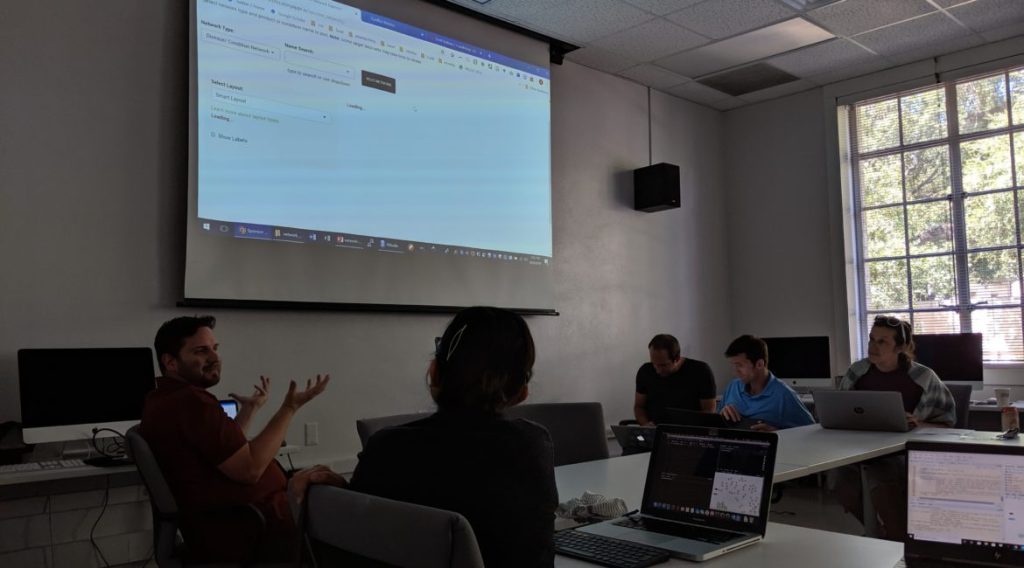
Workshop with Network Modeling in R with Dr. Scott Graham. 
Data Visualization workshop with Pulitzer Prize winner Visual Journalist Chris Canipe Credit:https://www.dwrl.utexas.edu/2019/09/26/workshop-recap-data-visualization/ 
Screenshot of the head image of “Lesson Plan: Visualizing The News As A Timeline” by Ansley Colclough. Credit: https://www.dwrl.utexas.edu/2018/10/03/lesson-plan-visualizing-the-news-as-a-timeline/ 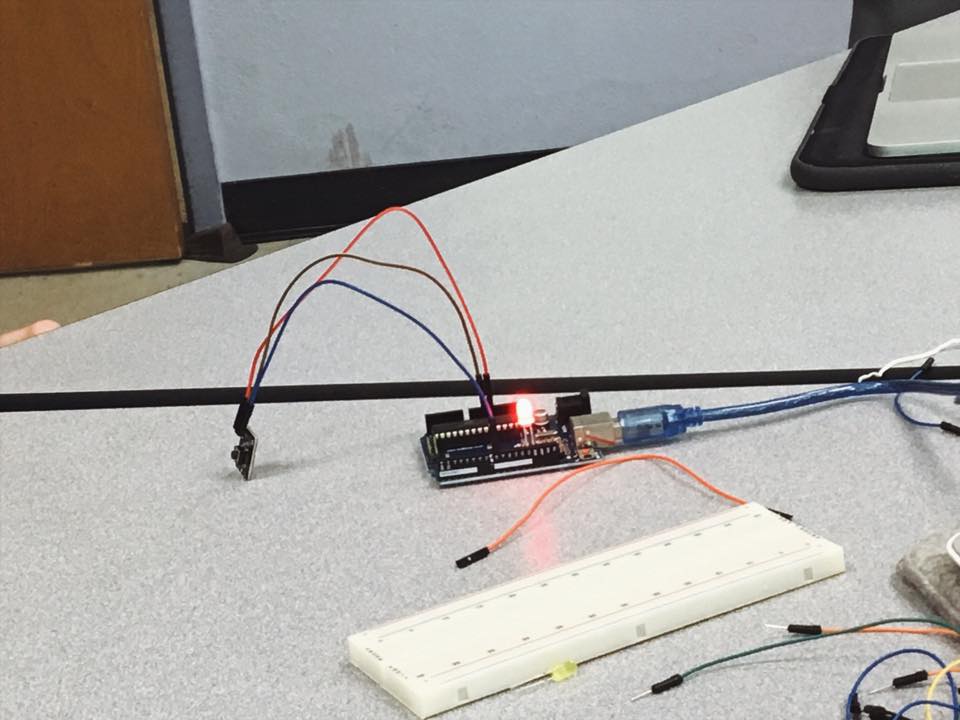
Photograph of an Arduino Project in a seminar led by Dr. Casey Boyle. Photograph Credit: (Lior) Ansley Colclough 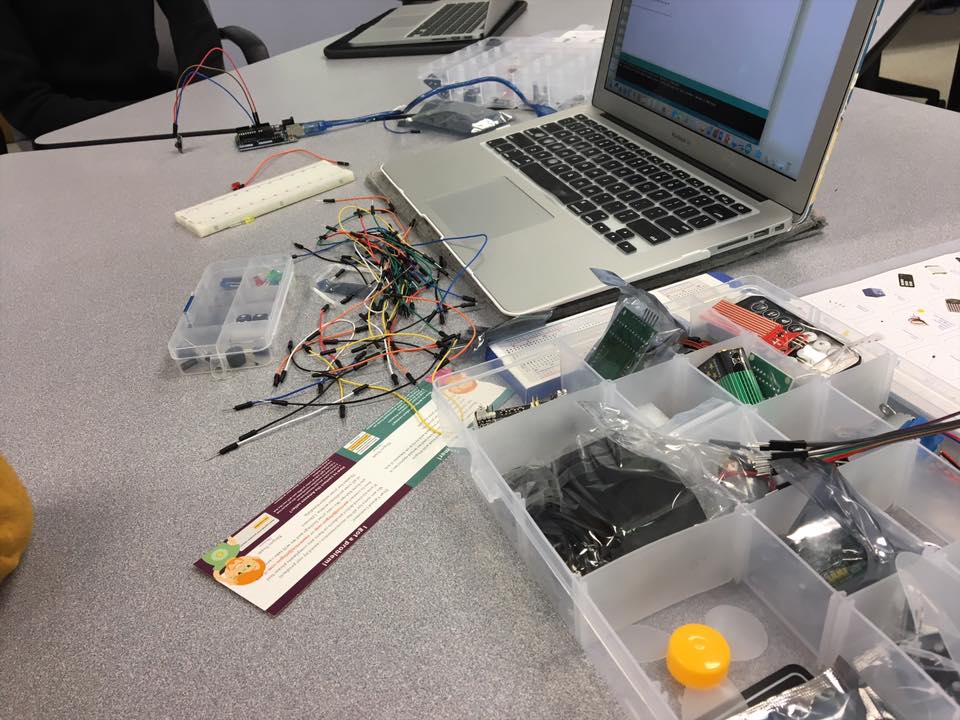
Photograph of an Arduino Project in a seminar led by Dr. Casey Boyle. Photograph Credit: (Lior) Ansley Colclough 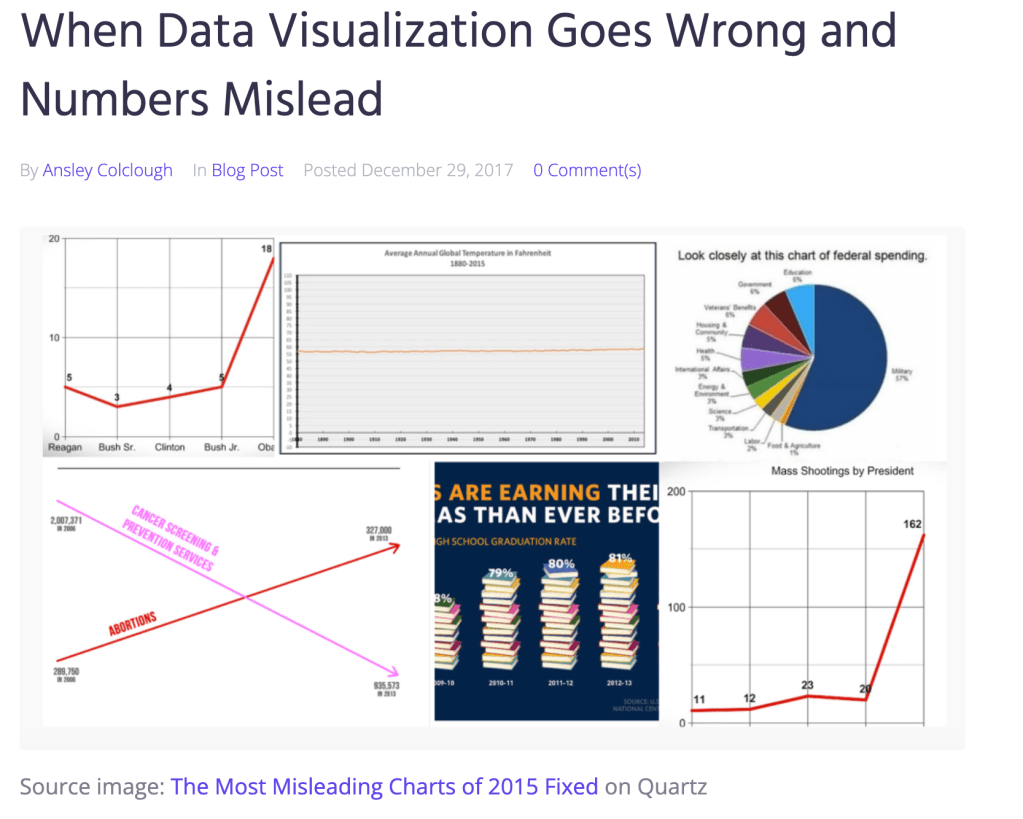
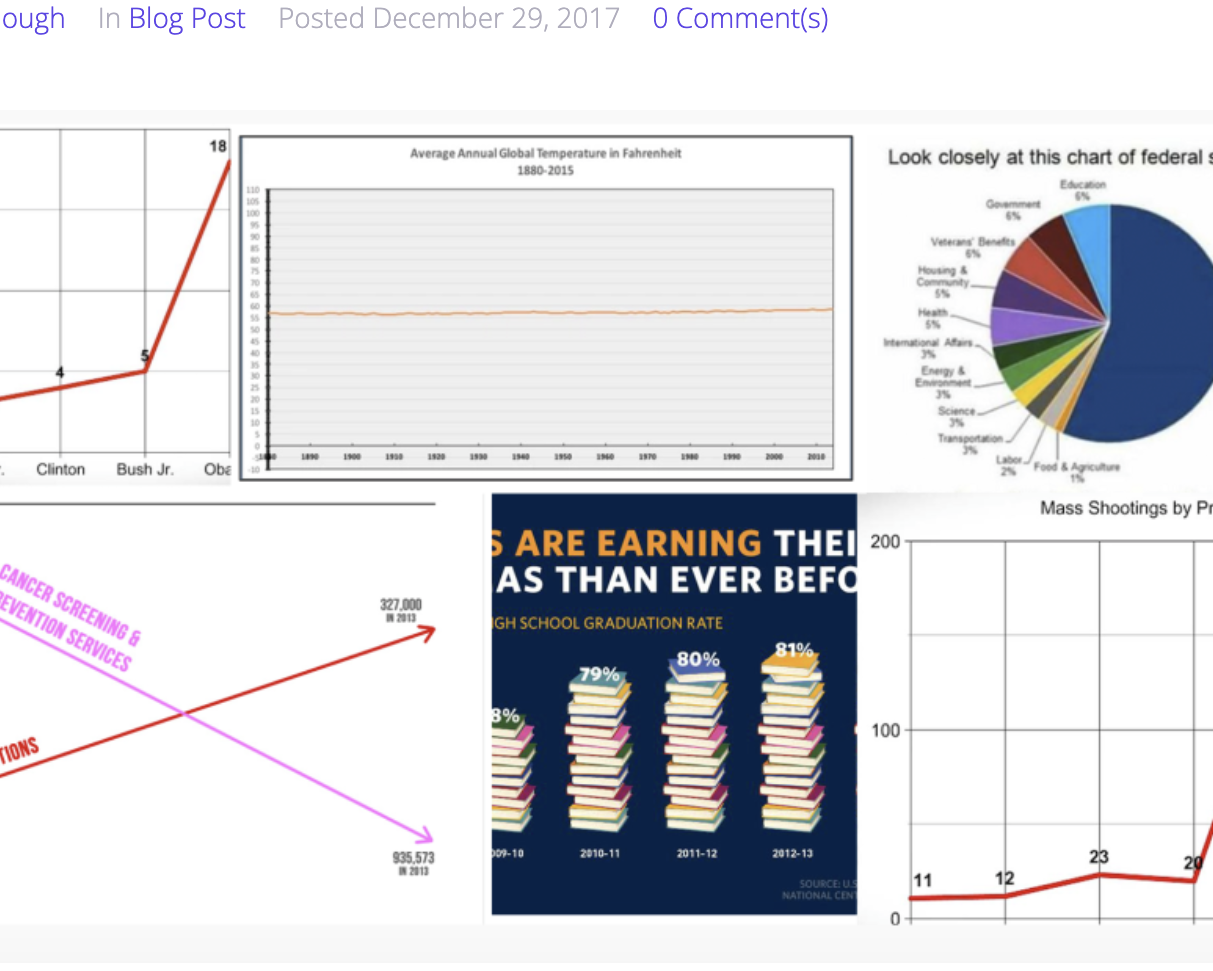
Screenshot of a blog post head image from a post by (Lior) Ansley Colclough. Credit: Source image: The Most Misleading Charts of 2015 Fixed on Quartz 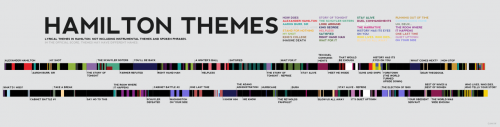
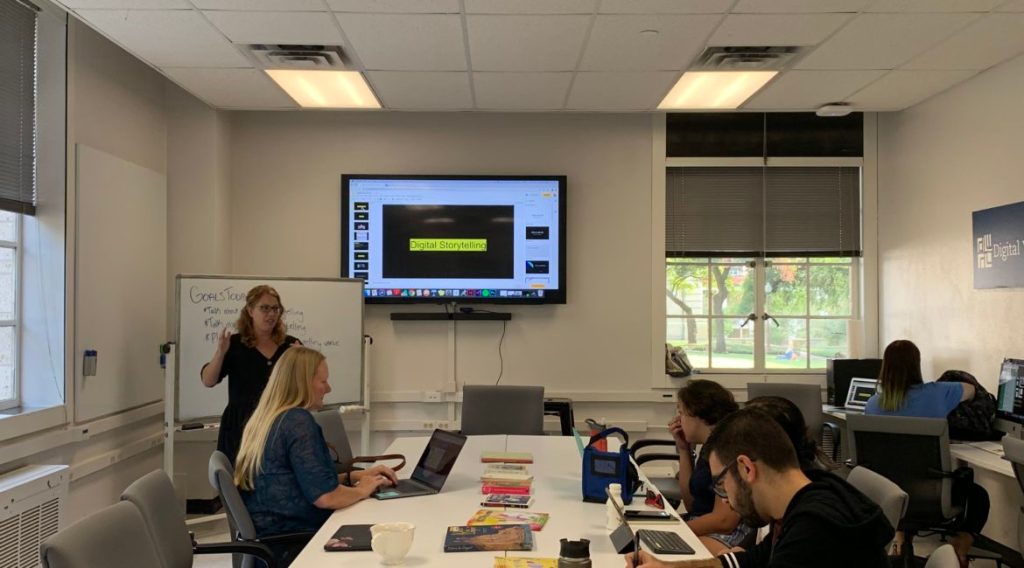
Screenshot of a workshop led by Sierra Mendez: Source: https://www.dwrl.utexas.edu/author/erica-brozovsky/ 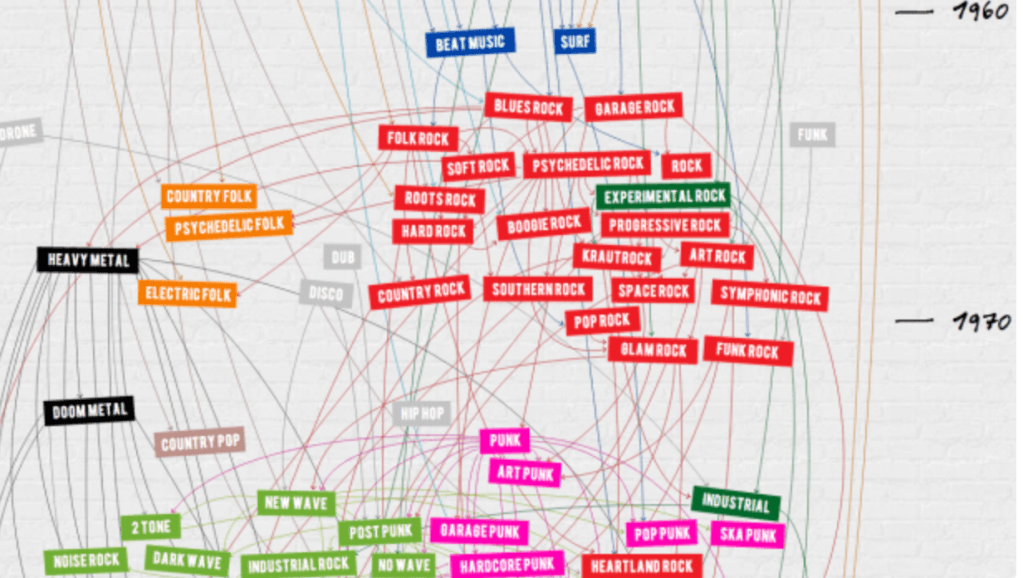
Screenshot of head image of data visualization lesson plan by (Lior) Ansley Colclough: 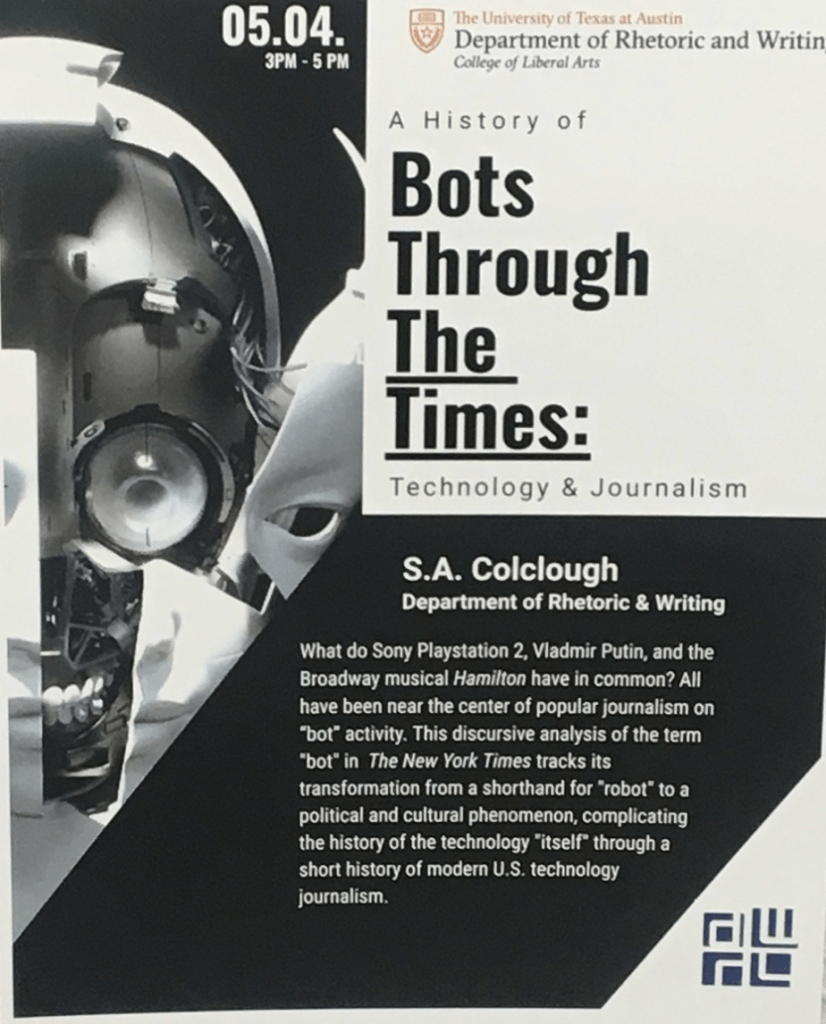
Conference poster designed in AdobePro. Credit: Lior A. Colclough
Lesson Plans
The DWRL provides online teaching resources for instructors in multimedia classrooms by offering online and in-person services for instructor support. Such services include online digital lesson plans found on the official website, in-class workshops upon request, on-site technical support in digital classrooms by graduate student staff members, and hardware equipment that can be checked out by students or faculty. As staff member content producers, we were required to provide detailed lesson plans that included step-by-step instructions for both preparation and in-class activities, assessment suggestions for both traditional grading and portfolio assessment, and video tutorials to walk the instructor and students through the lesson. The video tutorials were produced using screen capture software and editing with audio recording on Audacity provided by the DWRL studio.
For example, one of my lesson plans composed for the DWRL walked through a lesson activity using Twitter’s Tweetdeck feature (discontinued as of 2022). For this lesson plan, I composed a script, created a video tutorial using screen capture software to walk through the activity, then used the professional recording both provided by the lab and the software Audacity to produce the audio.

.
While the more recent redesign of the DWRL website has, unfortunately, corrupted the format of many of the original lesson plans, I have successfully backed up several of my old lesson plans on my website here. I am also in the process of tracking down and reorganizing the video tutorials that were lost in the reorganization of the website.
Going forward, I do intend on producing or revising my digital lesson plan content, but will self-publish this content under the appropriate tags to distinguish this work from content I produced in employment for the DWRL.
Blog Posts
Graduate student staff were required to produce a series of blog posts related to our group and individual research projects. My published work tended to focus on issues of accessible design and data visualization.
Once again, due to the format corruption issues as seen on one of my lesson plans here, I am in the process of backing up and restoring my work for the lab using The Internet Archive. Currently reformatted/archived posts and lesson plans may be found on my official blog archive and (in their original format) under my Portfolio.

I1
Flash Fellowship Project
The DWRL Flash Fellowship project funds graduate student staff members’ independent research projects in digital scholarship. First, we submitted project proposals that summarized our scholarly objectives for the project, our planned methodology and required resources, the rationale behind why we selected specific methodologies and tools, and our tentative plan for how we expected to accomplish our scholarly objectives in a specific time frame. This was my project proposal. The aim was to ultimately present our findings at the end of the academic school year at the annual DWRL showcase.
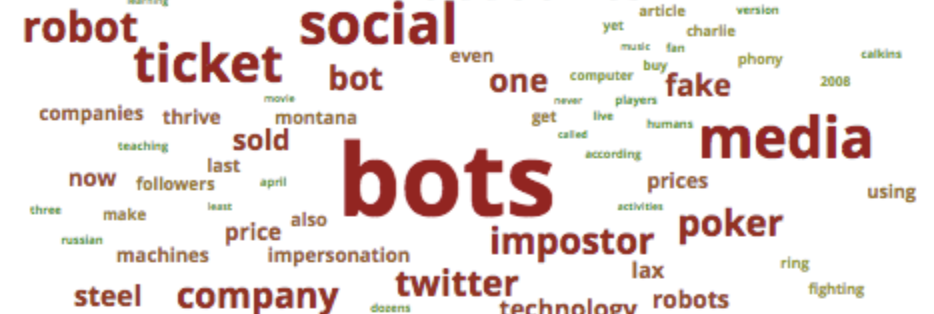
My project was to archive every single article in The New York Times containing the word “bot.” IThe aim of the project was to trace the discursive evolution of the word in popular news coverage by doing both a quantitative (empirically measurable) documentation of the terms popularity and publication context (date of publication, column, etc. and how often the term appeared in these contexts) as well as a qualitative analysis (definition of term, accompanying context including metadata patterns, etc.) I used the text-mining software Overviewdocs to archive and visualize patterns in the usage of “bat” over the course of the 200+ articles primarily in the last half of the 20th century. This project rose from my Master’s thesis on the rhetorical framing of bots as political agents in news coverage during the 2016 U.S. election cycle. Particularly, I was interested in exploring points in the term’s evolutionary trajectory from a “purely” technical term into a political topic.
The (unannounced) deletion of Overviewdocs at some point post-2021 and my computer changes since that research project erased my original, comprehensive database. However, I still have the notes, presentation PowerPoints, and numerous screenshots and videos recording my methods to verify the project’s existence. The videos were initially drafted in service of a potential DWRL lesson plan (see above), before I decided that the preparatory work necessary for this “lesson” required advanced legwork that was beyond practical application in the classroom for a general in-class activity.
Given the deletion of Overviewdocs, I see no purpose in completing and uploading the lesson plans — though I do plan on continuing to teach on digital archiving methods and textual analysis in the future.
Selected Software Skills and Tools:
During my time at the DWRL, I became proficient in a variety of digital tools and platforms. Here is a select list of the tools frequently used in lab projects:
- AdobePremier Pro
- DaVinci Resolve
- iMovie
- Audacity
- HTML
- Google Classroom
- Movai Screen Recorder
- Movai Suite
- Microsoft Excel
- Microsoft Office Suite
- Microsoft Word
- NVivo
- Panoptico
- Power Point
- Screenflick
- Symplicity
- Teams Zoom
- Arduino
- WordPress
- Wiz
- Zotero
Bonus: For some self-depreciatory humor, here’s some footage of myself as a graduate student, years ago, learning how to use Screenflick at the DWRL Lab located in Parlin Hall on the UT Austin campus. I kept this video because it is a rare documentation of my first encounter with a software I have used for years now, and captures my reaction to feeling a bit exasperated at my first attempt at the software and finding it difficult figure out where I was “going wrong” using what seemed to be a fairly straightforward tool…only to realize I had been recording all along!
 Lior Colclough, PhD